Rapid prototyping services are essential to modern advanced manufacturing, enabling engineers and product developers to move from concept to functional parts in days rather than months. As technologies continue to shrink and design complexity increases, conventional machining and standard additive manufacturing often lack the precision, material compatibility, and speed required.
Potomac Laser delivers high-precision rapid prototyping services using laser micromachining, micro-CNC, micro 3D printing, and advanced bonding processes. With typical turnaround times within two week and as fast as 24 hours in select cases (dependent on material type and thickness), Potomac supports fast iteration, functional validation, and seamless transition to production across the most demanding industries.
Rapid Prototyping for Advanced Manufacturing
In the context of advanced manufacturing, rapid prototyping extends far beyond simple form models. It enables the fabrication of functional, production-grade components that meet tight tolerances, fine feature requirements, and real-world performance demands.
Potomac’s rapid prototyping services are specifically designed for:
- Miniaturized and high-complexity components
- Tight dimensional tolerances
- Broad material requirements
- Scalable manufacturing pathways
Why Rapid Prototyping Matters as Technology Shrinks
As products continue to miniaturize, development teams face growing pressure to move quickly without sacrificing accuracy or reliability.
Faster Development
Rapid prototyping makes it possible to evaluate designs early and often. Instead of waiting weeks or months for tooling, teams can review physical parts, test performance, and make informed design decisions much sooner.
Lower Upfront Costs
By removing the need for hard tooling, molds, or photomasks, rapid prototyping significantly reduces initial development costs. This makes it easier to explore multiple design options before locking in a final approach.
Reduced Risk Before Production
Early prototypes help uncover design, material, or manufacturability issues before they become costly problems during scale-up.
Rapid Prototyping Technologies at Potomac Laser
Potomac brings multiple advanced fabrication technologies together under one roof, allowing projects to move quickly without switching suppliers or compromising consistency.
Laser Micromachining
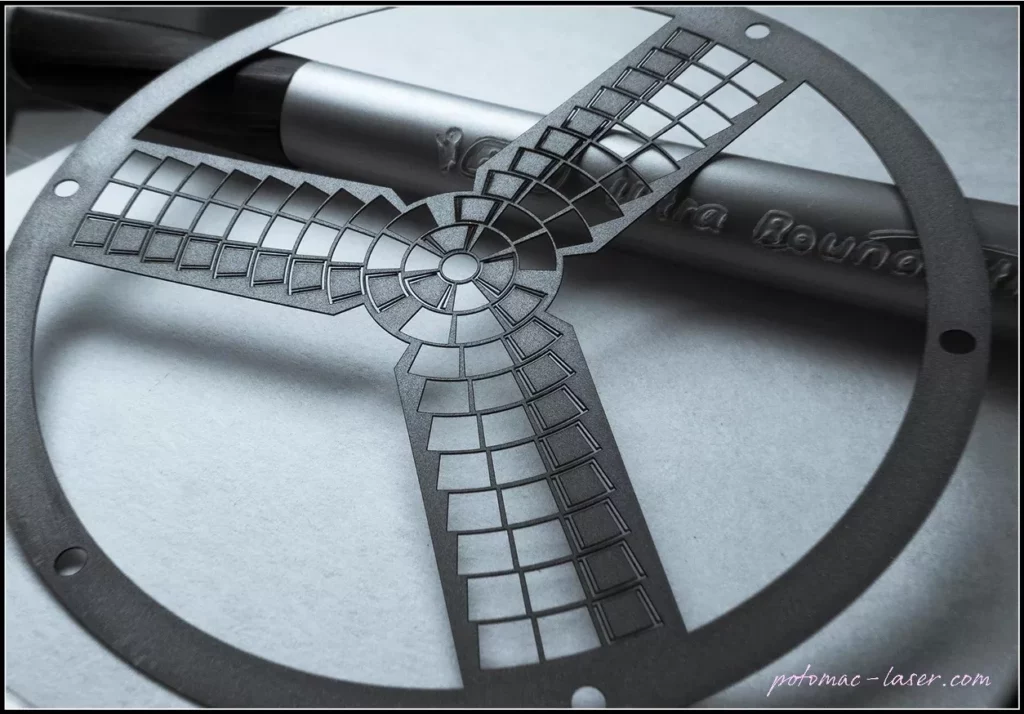
Laser micromachining is a core capability at Potomac and is particularly well suited for applications requiring very fine features.
Key capabilities include:
- Minimal heat-affected zones and clean edge quality
- Feature sizes as small as 2 µm
- Tolerances down to ±1 µm
- Laser cutting, drilling, ablation, and surface structuring
Micro-CNC Machining
For applications where strength, surface finish, and dimensional accuracy are critical, micro-CNC machining provides a reliable solution.
This process is commonly used for:
- Metal and engineering plastic parts
- Load-bearing components
- Prototypes that need to closely match production performance
Micro 3D Printing
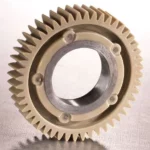
Micro 3D printing enables fast production of complex geometries that would be difficult or impossible to machine.
- Microfluidic structures
- Diagnostic and biomedical components
- Fixtures, housings, and functional test parts
Bonding and Assembly

Many advanced devices require more than a single fabricated part. Potomac supports a range of bonding and assembly processes to deliver fully functional prototypes, including:
- Polymer-to-polymer bonding
- Glass and silicon bonding
- Multi-material assemblies
Materials for Rapid Prototyping
One of the key advantages of Potomac’s rapid prototyping services is material flexibility. Prototypes can be made using the same materials intended for final production.
Metals
Including stainless steel, aluminum, titanium, nickel alloys, and specialty thin foils.
Polymers
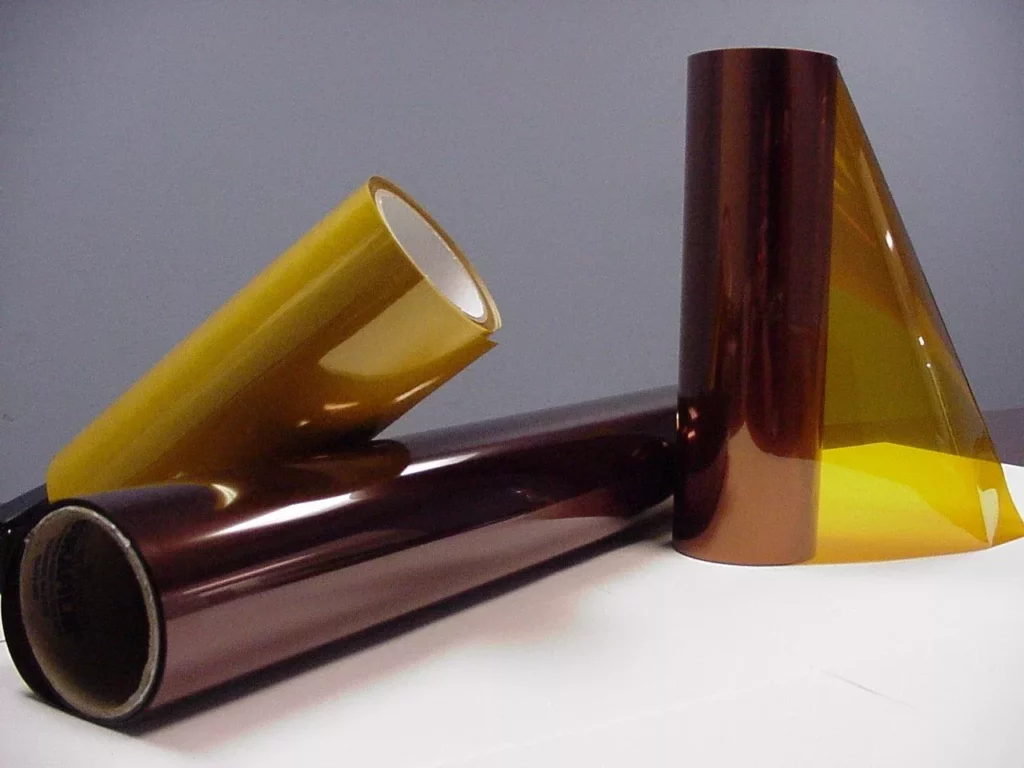
Such as PMMA, polycarbonate, polyimide, COC/COP, and other engineering or biocompatible polymers.
Glass, Silicon & Ceramics
Including borosilicate and fused silica glass, silicon wafers, and technical ceramics used in electronics and photonics.
From Concept to Production
Potomac’s digital manufacturing workflow is designed to keep projects moving quickly while maintaining tight control over quality.
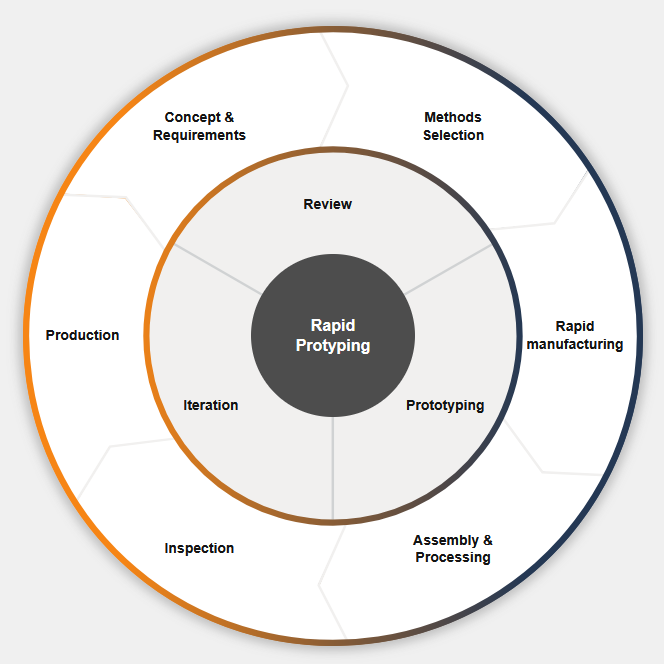
- Review of the concept and application requirements
- Selection of the most suitable fabrication processes
- Rapid manufacturing using laser, CNC, or additive methods
- Bonding, assembly, and post-processing as needed
- Inspection and dimensional verification
- Iteration or transition to production
Industries Served
Potomac’s rapid prototyping services are used across a wide range of industries, including:
- Aerospace
- Automotive
- Biotechnology
- Medical devices
- Pharmaceutical manufacturing
- Semiconductor and microelectronics
- Electronics and photonics
Why Choose Potomac Photonics?
Potomac Laser provides rapid prototyping services for applications that push beyond the limits of conventional manufacturing.
- Micron-level precision
- Fast, reliable turnaround times
- Broad material capabilities
- Integrated fabrication, bonding, and assembly
- Experience across highly regulated and high-tech industries
- A clear path from prototype to production
Need Additional Microfabrication?
Potomac offers generous incentives to our customers that combine rapid prototyping with our exhaustive list of other microfabrication processes.
Also From the Goodfellow Group
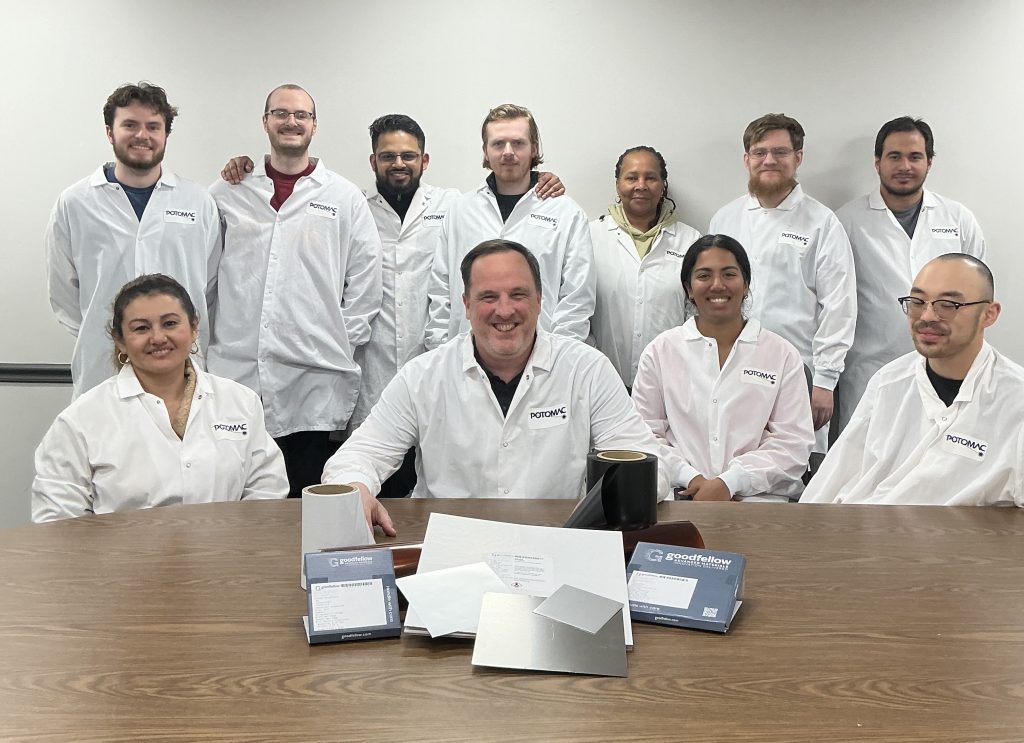
Rapid prototyping is most effective when the prototype material closely matches the intended production material. Goodfellow supplies over 170,000 materials — metals, polymers, ceramics, and composites — in small quantities with no minimum order.
Source your prototype material from Goodfellow’s 170,000+ material catalogue.
Prototype parts can be submitted for dimensional, compositional, and mechanical characterization through Goodfellow’s ISO 17025-accredited materials testing division — confirming that the fabricated prototype meets design intent before design lock and production scale-up.
Verify prototype material performance and dimensional accuracy with accredited testing.