
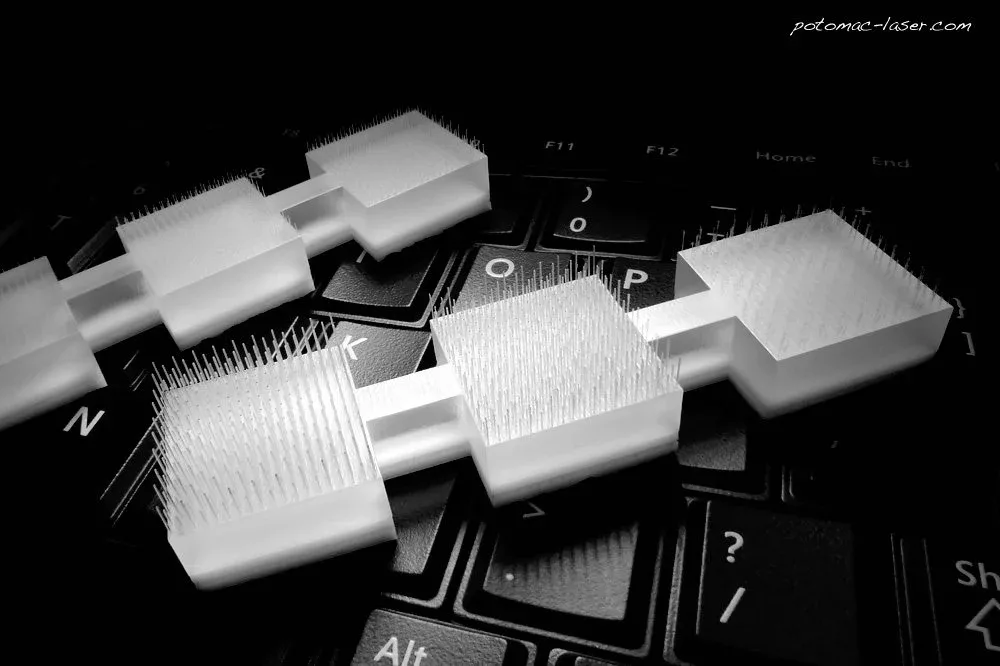
Micro 3D Printing for Advanced Manufacturing
Micro 3D printing enables the creation of extremely small, highly complex components that push beyond the limits of conventional machining and standard additive manufacturing. Potomac Photonics specializes in micro-scale additive manufacturing for applications where feature size, precision, and functional performance are critical.
By integrating micro 3D printing with laser micromachining, micro-CNC, bonding, and inspection, Potomac supports the development of micro-components that are ready for real-world use.
High-Resolution Micro 3D Printing
Potomac’s facility utilizes high-resolution, professional micro 3D printing systems capable of layer thicknesses as fine as 16 microns, enabling the production of miniature components with tight tolerances and highly detailed features.
This level of resolution supports the fabrication of micro-posts, fine structures, and intricate geometries that would be impractical or impossible to machine.
Potomac has access to a wide range of materials, including bio-compatible materials that can be sterilized for implantable and medical applications, ensuring printed parts meet both performance and regulatory requirements.
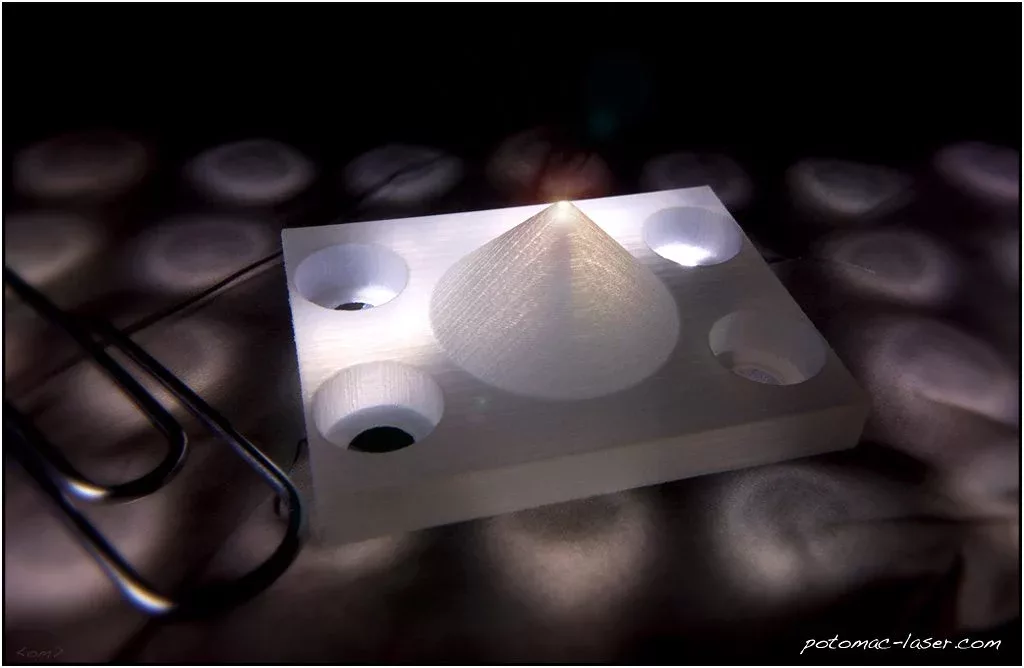
CAD-to-Machine Integration
In micro 3D printing, the transition from CAD model to manufactured part is often the most critical and most underestimated step. Small errors in file preparation, slicing, or process selection can result in failed builds or unusable parts.
Potomac brings decades of experience in digital fabrication, including laser micromachining and micro hole drilling, to ensure CAD files are correctly translated for the specific 3D printing process and equipment being used. Designs are reviewed through the lens of Design for Manufacturing (DFM) and, more importantly, Design for the Specific Process, ensuring micro-scale features are printable, repeatable, and functional.
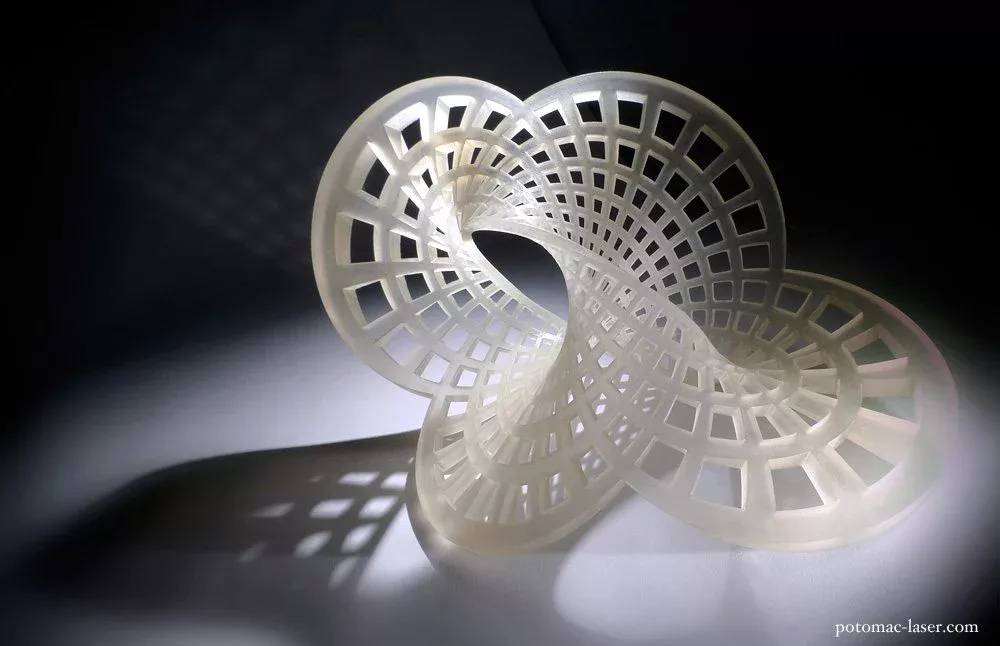
Micro-Scale Geometries and Functional Integration
Micro 3D printing allows engineers to move beyond traditional design constraints by enabling complex internal structures, fine surface features, and integrated functionality within a single part.
Potomac supports designs that leverage micro additive manufacturing to reduce part count, eliminate secondary operations, and simplify assembly.
This approach is particularly valuable for devices where size, weight, and performance are tightly constrained.
Materials for Micro 3D Printing Applications
As parts shrink, material behavior becomes increasingly important. Potomac supports micro 3D printing across a broad range of polymers, specialty plastics, metals, and ceramics, selected based on mechanical, thermal, chemical, and regulatory requirements.
This includes materials suitable for medical, biotech, and life science applications, as well as materials designed for demanding industrial and research environments.
Material selection is guided by both application performance and compatibility with micro-scale printing processes.
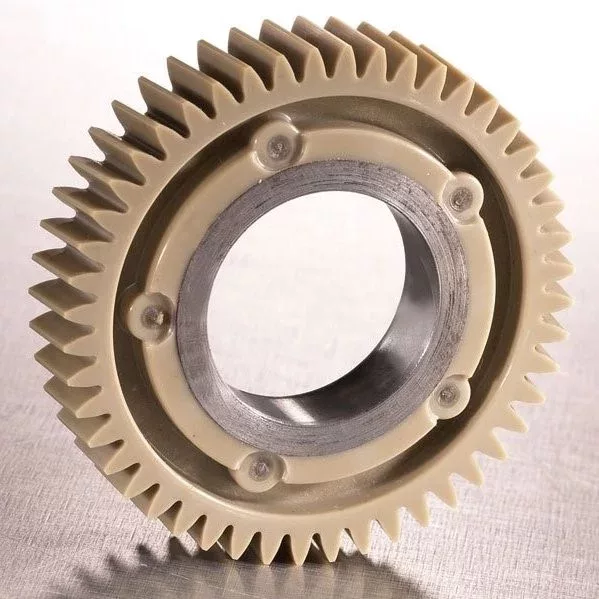
Post-Processing, Bonding, and Assembly
Unlike theoretical “print-and-use” concepts, real-world micro 3D printed parts often require post-processing to achieve final performance. Potomac maintains in-house equipment and expertise to support post-processing steps efficiently and consistently.
This includes cleaning, surface finishing, bonding, and micro-assembly, allowing printed parts to be delivered in a state that is ready for testing, integration, or downstream manufacturing.

Inspection and Quality Control
Precision at the micro-scale demands rigorous inspection. Potomac is committed to quality and operates under ISO 9001 and ISO 13485 quality systems, reflecting decades of experience producing parts for demanding industrial and medical applications.
With a history of achieving tolerances as tight as ±0.5 microns, Potomac applies advanced inspection and dimensional verification techniques to ensure micro 3D printed components meet design intent and functional requirements.
Replication and Production Scaling
For applications requiring larger quantities, micro 3D printing can be used to create highly accurate molds or master patterns that enable efficient replication. This approach allows parts to move from additive manufacturing into repeatable production processes without sacrificing precision.
As a true one-stop advanced manufacturing partner, Potomac supports scaling from single micro-components to higher-volume production through integrated fabrication, replication, and inspection capabilities.
Need Additional Microfabrication?
Potomac offers generous incentives to our customers that combine micro 3d printing with our exhaustive list of other microfabrication processes.
Also From the Goodfellow Group
Material feedstock quality directly affects the resolution and mechanical integrity of micro-printed and CNC-machined components. Goodfellow supplies precision metal rod, wire, and powder, as well as engineering polymers, for use as additive and subtractive manufacturing feedstocks.
Source your feedstock materials from Goodfellow.
Part microstructure, density, surface roughness, and dimensional accuracy can be assessed through Goodfellow’s ISO 17025-accredited materials testing division, supporting process validation and component qualification.
Characterize printed or machined components before use in critical assemblies.